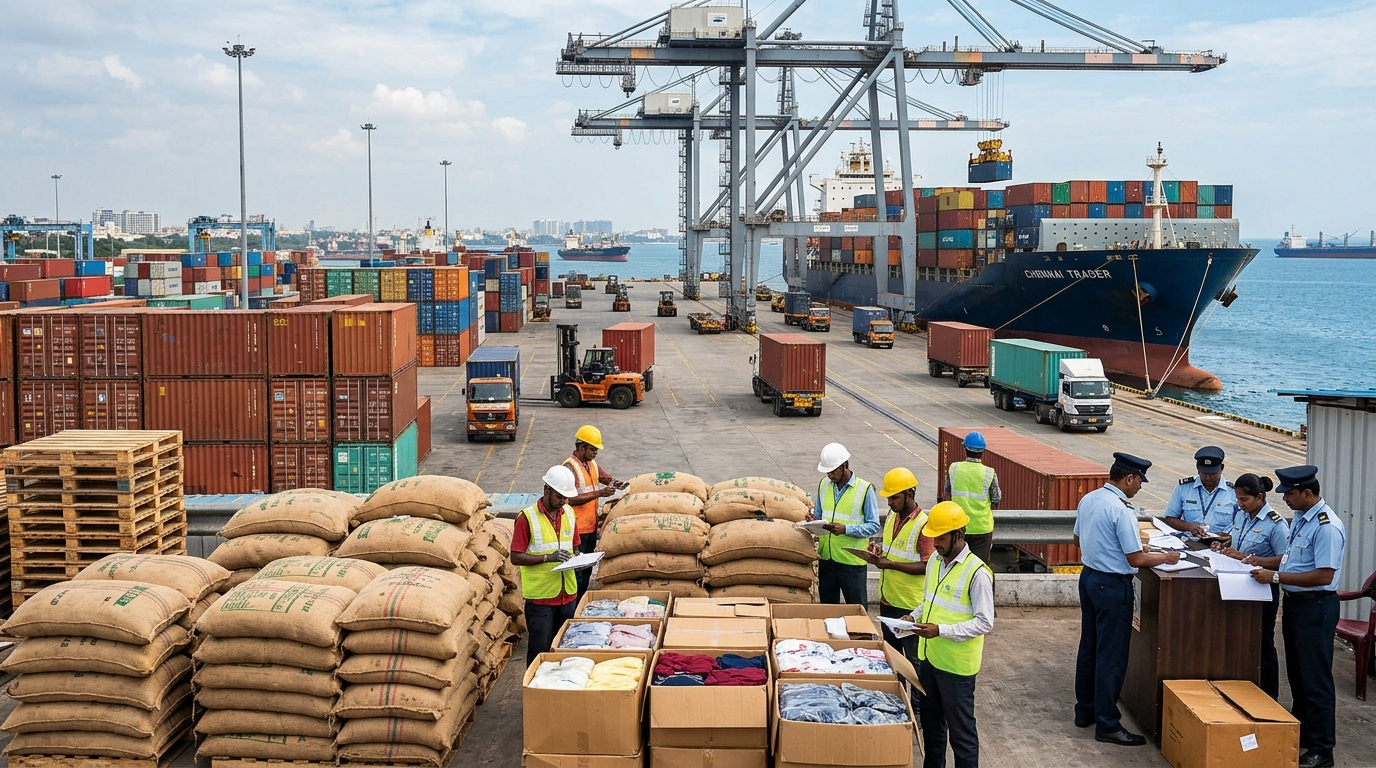
Indian Export Process – 8 Key Steps Every Exporter Should Know in 2026
Learn the complete Indian export process in 2026, from order placement and documentation to customs clearance and delivery. This step-by-step guide helps exporters and global buyers understand how international shipments move from India to global markets.
Understanding the Indian Export Process
India has become one of the world's fastest-growing export hubs for agricultural commodities, manufactured goods, textiles, and processed food products. Every year, thousands of exporters ship goods from India to international markets across Asia, Europe, the Middle East, and North America.
However, exporting goods internationally involves multiple stages including order confirmation, documentation, logistics coordination, customs clearance, and final delivery. Each step must be completed correctly to ensure shipments move smoothly across borders.
Understanding the export process helps businesses avoid delays, manage costs effectively, and maintain reliable trade relationships with international buyers.
This guide explains the eight key steps involved in the Indian export journey and how exporters can successfully manage global shipments.
The 8 Key Steps in the Indian Export Journey
Exporting goods from India typically follows a structured workflow that ensures compliance with both Indian export regulations and destination country import rules.
1. Order Placement
The export process begins when an international buyer places an order with the exporter. This usually happens after price negotiation, product specification agreement, and confirmation of trade terms.
The exporter then issues a Proforma Invoice, which outlines:
• Product description and quantity
• Unit pricing and total value
• Payment terms
• Delivery timelines
• Shipping terms such as FOB or CIF
Once the buyer approves the Proforma Invoice, they typically issue a Purchase Order (PO), which officially confirms the order.
2. Pre-Shipment Preparation
After receiving the confirmed order, exporters begin preparing the shipment. This stage includes financial arrangements, certification checks, and regulatory compliance.
Common pre-shipment activities include:
• Arranging payment security through Letters of Credit (LC) or advance payments
• Preparing product certifications such as ISO, HACCP, or GOTS depending on the industry
• Applying for government export schemes such as Advance Authorization
• Scheduling production and shipment timelines
Proper planning during this stage ensures the exporter can fulfill the order within the agreed timeline.
3. Manufacturing and Packaging
Once preparations are complete, production begins. Manufacturers produce the goods according to buyer specifications and industry quality standards.
During this stage exporters must focus on:
• Maintaining product quality and consistency
• Conducting quality inspections
• Ensuring packaging meets export requirements
• Preparing export-grade labeling
Packaging is especially important for agro commodities and food products because it protects goods from moisture, contamination, and damage during international transit.
4. Customs Documentation and Shipping Bill Filing
Before goods can leave India, exporters must complete customs documentation. This process is handled electronically through India's export portal.
Exporters submit documentation through the ICEGATE (Indian Customs Electronic Gateway) system.
Important documents include:
• Commercial Invoice
• Packing List
• Shipping Bill
• HS Code classification
• Certificate of Origin
• Product certifications if required
The Shipping Bill is one of the most critical export documents. It acts as the official authorization from Indian customs allowing goods to leave the country.
5. Port Operations and Cargo Handling
After customs clearance, goods are transported to the designated port or airport for shipment.
At this stage logistics partners handle:
• Container loading and cargo handling
• Freight booking with shipping lines
• Port documentation and inspections
• Coordination with freight forwarders
Proper logistics coordination ensures goods are loaded safely and dispatched according to the shipping schedule.
6. Bill of Lading (B/L) Issuance
Once cargo is loaded onto the vessel, the shipping company issues the Bill of Lading (B/L).
The Bill of Lading is one of the most important documents in international trade because it acts as:
• Proof of shipment
• Receipt of cargo by the shipping company
• Document of ownership for the goods
In transactions involving Letters of Credit, the Bill of Lading is often required for payment processing.
7. Shipment in Transit
Once the vessel departs, the cargo enters the international shipping phase. Transit time varies depending on the destination country.
During this stage exporters and buyers monitor shipment progress using:
• Cargo tracking systems
• Shipping line updates
• Freight forwarder communication
Exporters usually arrange marine insurance to protect shipments against damage, theft, or transit delays.
8. Import Clearance and Final Delivery
When the shipment arrives at the destination port, the importer completes customs clearance procedures.
This typically involves:
• Submitting import documentation
• Paying applicable duties and taxes
• Passing customs inspections
• Arranging inland transportation
Once cleared, the goods are delivered to the buyer’s warehouse or distribution center.
Government Schemes Supporting Indian Exporters
The Indian government offers several incentive programs designed to strengthen the country's export competitiveness.
Advance Authorization Scheme
This scheme allows exporters to import raw materials without paying import duties, provided the final product is exported.
RoDTEP (Remission of Duties and Taxes on Exported Products)
RoDTEP refunds certain taxes and duties incurred during manufacturing. Refund rates generally range between 1.5% and 3.3% depending on the product category.
RoSCTL Scheme
This scheme supports textile exporters by providing rebates on embedded taxes. Refund rates can reach 3%–4% for eligible products.
These incentives help exporters remain competitive in global markets.
Typical Export Timeline from India
The entire export cycle from order confirmation to delivery usually takes around 40 to 55 days, depending on production timelines, shipping distance, and customs procedures.
Businesses that manage logistics efficiently can reduce delays and maintain consistent supply chains for international buyers.
Cost Savings and Competitive Advantages
With government incentives and efficient supply chains, exporters can achieve potential cost savings of approximately 8% to 14% on international shipments.
These savings improve pricing competitiveness and allow Indian exporters to serve global markets more effectively.
Explore More Topics
More from Export Guides
Next Step
Find verified exporters and turn this research into real sourcing conversations.
Related Products
Basmati Rice
Global traders ltd · India
Send InquiryOnion,Potato,Carrot,Drumstick,Drumstick leaves,Curry leaves,Banana
Ocean Gate Enterprises · India
Send InquiryPremium Yunnan Luoping Dried Ginger Slices
云南钰峻生态农业有限公司 · Canada
Send InquiryBlack Pepper Whole
Horizon Green · India
Send InquiryRelated Exporters
Ready to grow your export business?
Join TradesLynk and connect with verified international buyers today.
Create Free Profile