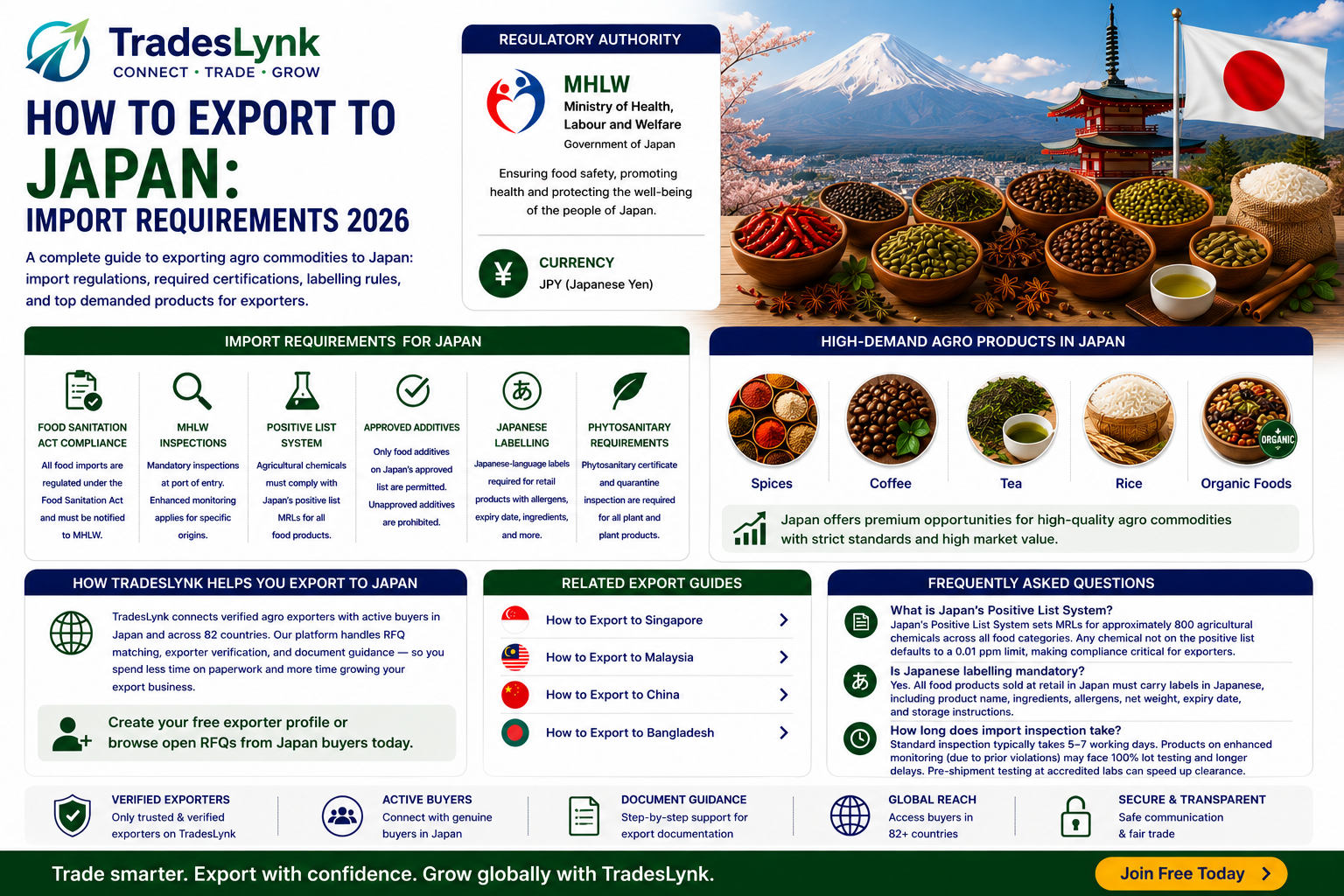
How to Export to Japan: Import Requirements 2026 | TradesLynk
A complete guide to exporting agro commodities to Japan: import regulations, required certifications, labelling rules, and top demanded products for exporters.
Overview
Exporting agro commodities to Japan is a significant opportunity for verified exporters on TradesLynk. The primary regulatory authority is Ministry of Health, Labour and Welfare (MHLW). All trade is conducted in JPY (Japanese Yen). Understanding the import framework before your first shipment will save time, avoid costly rejections, and build long-term buyer relationships.
Import Requirements for Japan
The following requirements apply to agro-commodity exporters shipping to Japan:
- Food imports are regulated under the Food Sanitation Act and notified to MHLW at port of entry.
- MHLW conducts mandatory inspections; products may undergo enhanced monitoring for specific origins.
- Japan's positive list for agricultural chemicals sets maximum residue limits (MRLs) for all food.
- Food additives must be on Japan's approved list; unapproved additives cannot enter.
- Japanese-language labels are required for retail products — required fields include allergens, expiry date, and ingredients.
- Phytosanitary certification and quarantine inspection are required for plant products.
High-Demand Agro Products in Japan
Buyers in Japan consistently source the following commodities from verified global exporters:
How TradesLynk Helps You Export to Japan
TradesLynk connects verified agro exporters with active buyers in Japan and across 82 countries. Our platform handles RFQ matching, exporter verification, and document guidance — so you spend less time on paperwork and more time growing your export business.
Create your free exporter profile or browse open RFQs from Japan buyers today.
Related Export Guides
Explore import requirements for other markets in the same region:
Frequently Asked Questions
What is Japan's Positive List System for agricultural chemicals?
Japan's Positive List System sets MRLs for approximately 800 agricultural chemicals across all food categories. Any chemical not on the positive list defaults to a 0.01 ppm limit, making compliance critical for exporters.
Does Japan require Japanese-language labels on imported food?
Yes. All food products sold at retail in Japan must carry labels in Japanese, including product name, ingredients, allergens, net weight, expiry date, and storage instructions.
How long does MHLW food import inspection take in Japan?
Standard inspection typically takes 5–7 working days. Products on enhanced monitoring (due to prior violations) may face 100% lot testing and longer delays. Pre-shipment testing at accredited labs can speed up clearance.
Next Step
Find verified exporters and turn this research into real sourcing conversations.
Related Products
Premium Yunnan Luoping Dried Ginger Slices
云南钰峻生态农业有限公司 · Canada
Send InquiryPremium Basmati Rice
ITC Limited · India
Send InquiryPremium Basmati Rice
Spice Export Co · India
Send InquiryPremium Kashmiri Saffron
Global Exports india · India
Send InquiryRelated Exporters
Ready to grow your export business?
Join TradesLynk and connect with verified international buyers today.
Create Free Profile